
Loyalty rules
A rule is one sentence: when a customer does this, give them that. Every part of your program except tiers is made of rules, and they're all on one page.
Add a rule
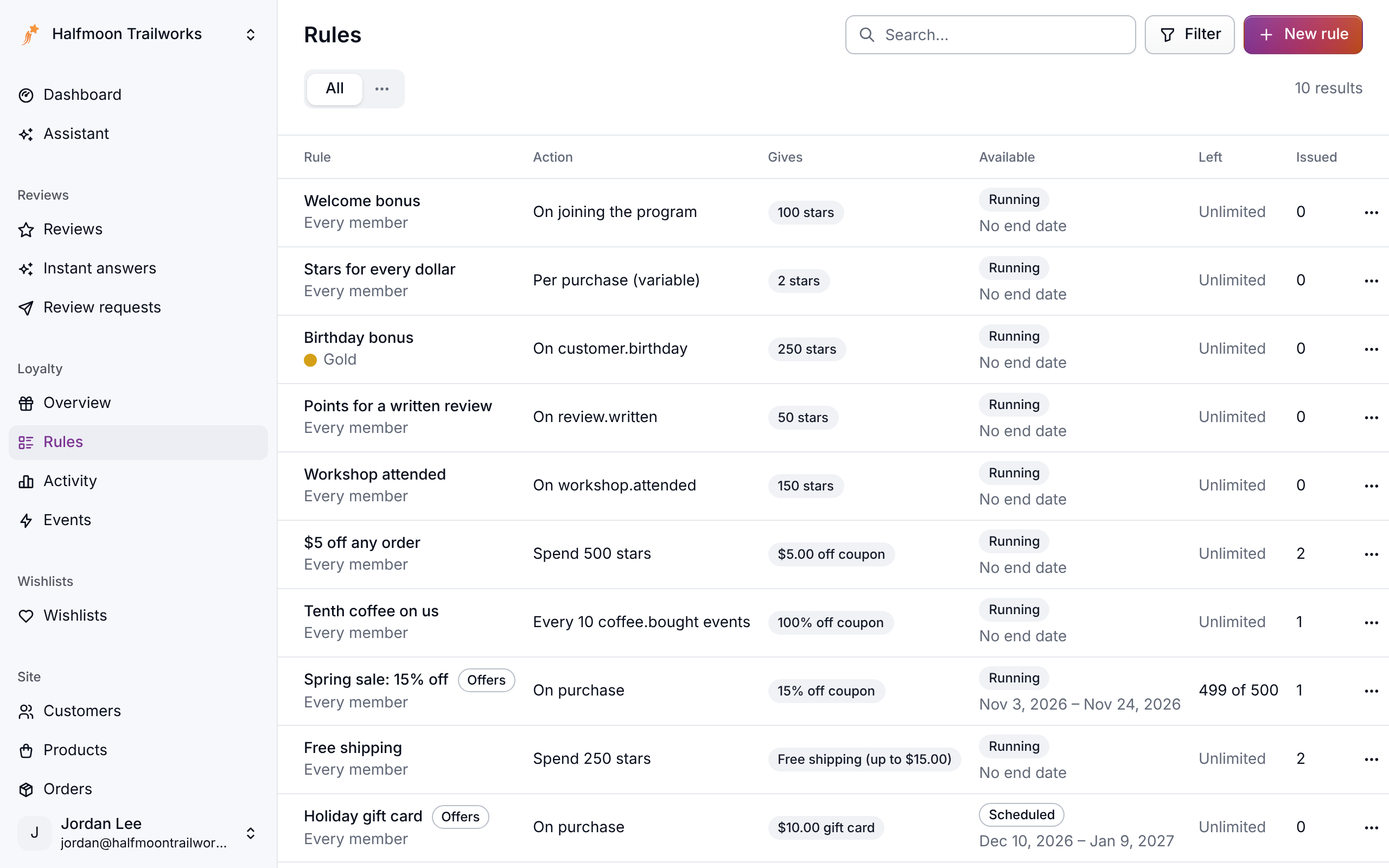
- Open Loyalty → Rules and press New rule.
- Give it a name. Members see it, so "Birthday treat" beats "Rule 4".
- Pick a Trigger: what the customer does.
- Pick a Reward: what they get.
- Set any limits, then save. On a live program the rule takes effect right away.
Triggers
- Places an order. Can scale with the amount spent and be limited to certain products. It measures the order subtotal (before shipping and tax) unless you switch Measured against to the total.
- Joins the program. Counts every sign-up, including a customer you enroll yourself from their customer page.
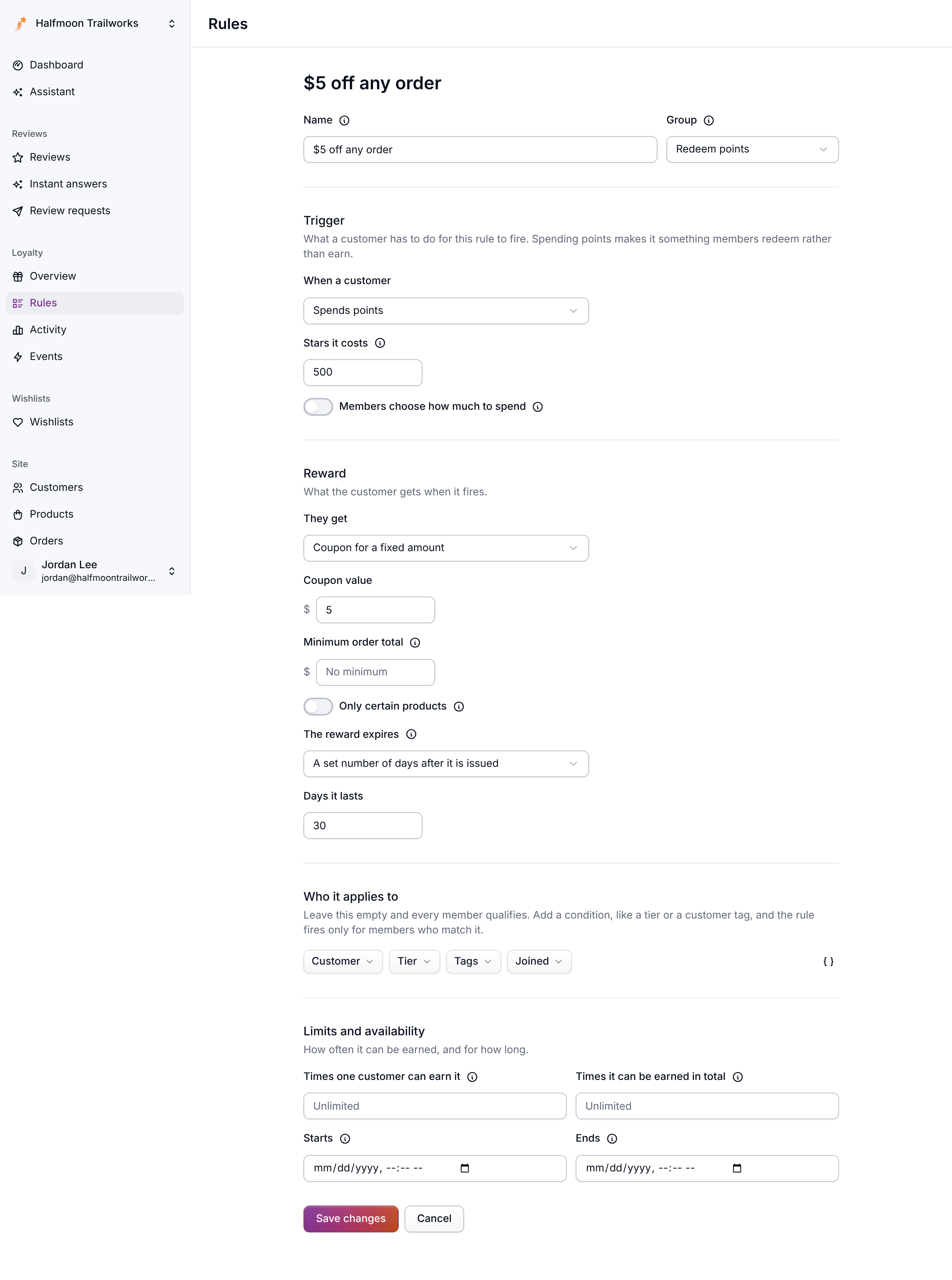
- Spends points. The member chooses to spend points on this reward.
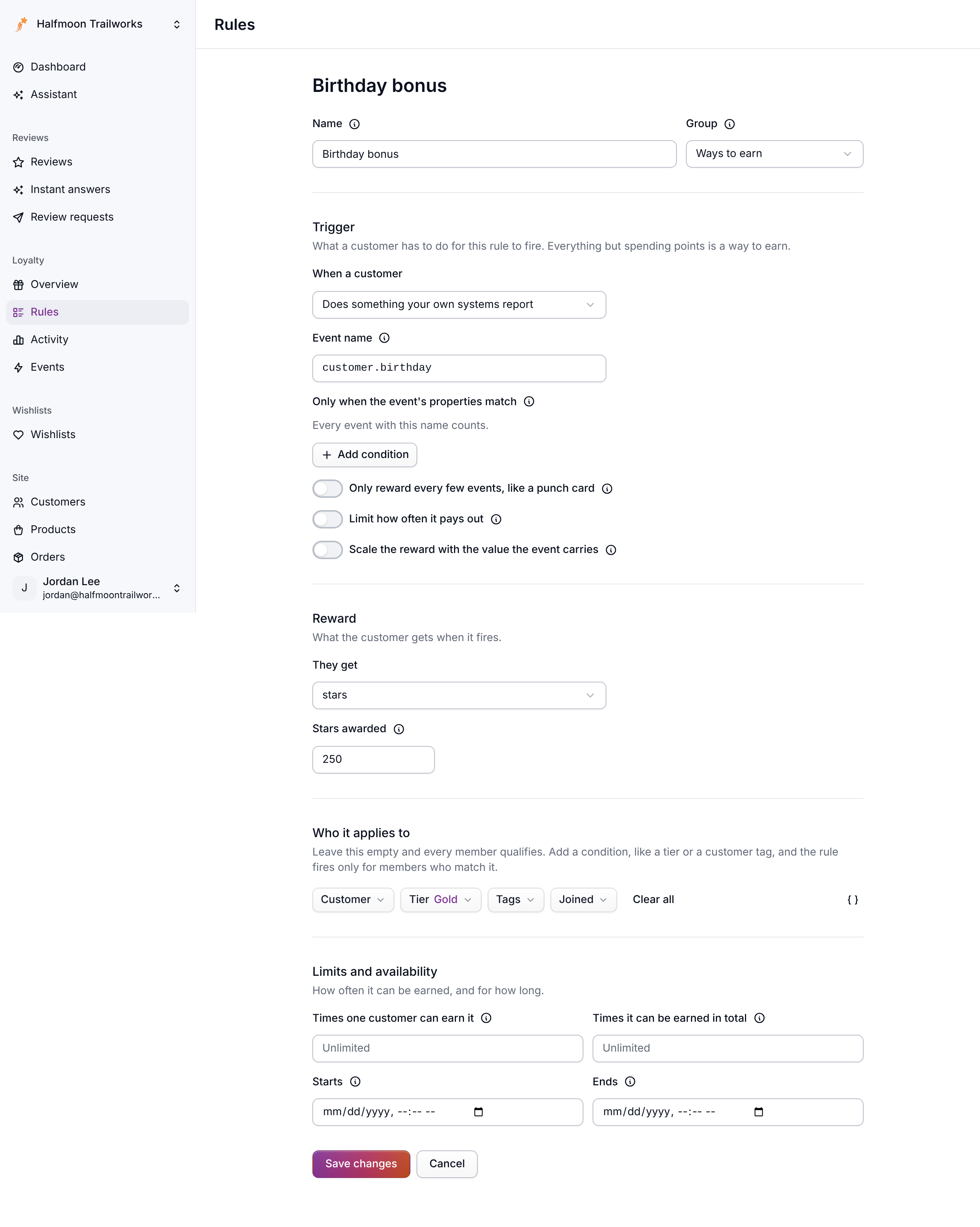
- Does something your own systems report. Anything your website, booking system or shop till tells Meisei about, like a class attended, a review on your own site, a newsletter signup or a social follow. It can count only events whose details match, pay out every tenth time like a punch card, and cap itself per day, week or month. A daily check-in reward is one of these with a limit of once a day. See Custom loyalty events.
To reward birthdays, keep each customer's birthday in their metadata as MM-DD, turn on the
Birthday loyalty events template under
Settings → Automations, and add a
rule for the customer.birthday event. See Automations.
Rewards
- Points, in your program's own words. Your program needs points named first.
- Coupon for a fixed amount or for a percentage off, optionally limited to certain products or to orders above a minimum.
- Free shipping, optionally capped at an amount.
- Gift card. Needs Shopify Plus on a connected store.
On a connected Shopify store, Meisei creates the discount code the moment a reward is issued, so it works at checkout with nothing else from you.
Where a rule shows up
Every rule belongs to a Group, which is the section of the widget members find it in. Meisei sets Ways to earn and Redeem points from the trigger. You choose Offers yourself. Pick it for a limited-time promotion and the rule appears in its own Offers section. To see just your offers, filter the Rules page by group and save it as a quick filter.
Who it applies to
Every rule applies to every member unless you narrow it. The Who it applies to section of the editor is a filter bar: pick a Customer, a Tier, a customer Tag or when they Joined, or switch to the advanced view (the braces button) to write a filter by hand. A rule with a condition is exclusive: members who don't match it never see it or earn it. The Rules page and the program overview say who each rule is for, either the tiers it names or "Members matching a filter".

Limits and availability
- Times one customer can earn it, and Times it can be earned in total. Empty means unlimited.
- Starts and Ends. A rule is live whenever it's inside this window, which is how you schedule a campaign. Deactivate in the row menu ends the rule now.
Deleting a rule keeps everything it already handed out and only stops it firing again. Its rewards still name the rule they came from, marked as deleted. If you might want it back, deactivate it instead.
Let members spend points
A rule whose trigger is Spends points is what members see under Redeem points. Set
the price in the "it costs" field, and give a coupon, gift card or free shipping (points
can't buy points). Turn on Members choose how much to spend and they can spend a
multiple of the price on a fixed-amount coupon or gift card, with the reward scaling to match.
If something isn't working
- A rule won't save with a points reward. Name your points first under Settings → Features → Loyalty.
- A rule never fires. Check its Starts and Ends dates and its Who it applies to condition. Rows are badged Running, Scheduled or Not running.
- A product filter is refused. The products it names have to exist in your store. A tag can be one no product carries yet, so you can set up the rule before tagging anything.
- A rule for your own systems' events never fires. Check the event arrived under Loyalty → Events and that its name matches the rule's Event name exactly.
Next steps
- See what a rule handed out: Loyalty activity.
- Decide when coupons lapse: Loyalty rewards.
- Make a reward exclusive: Loyalty tiers.